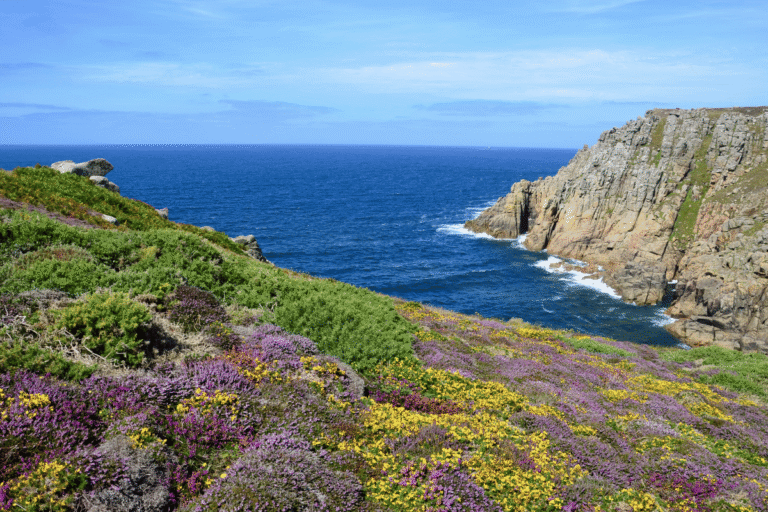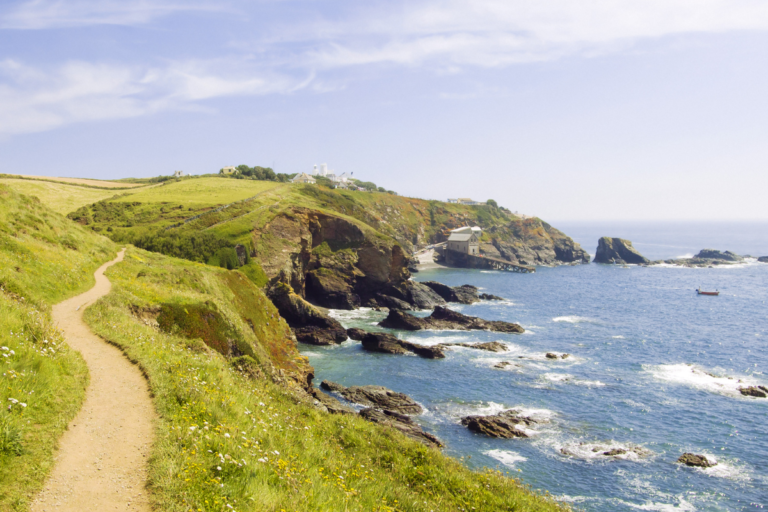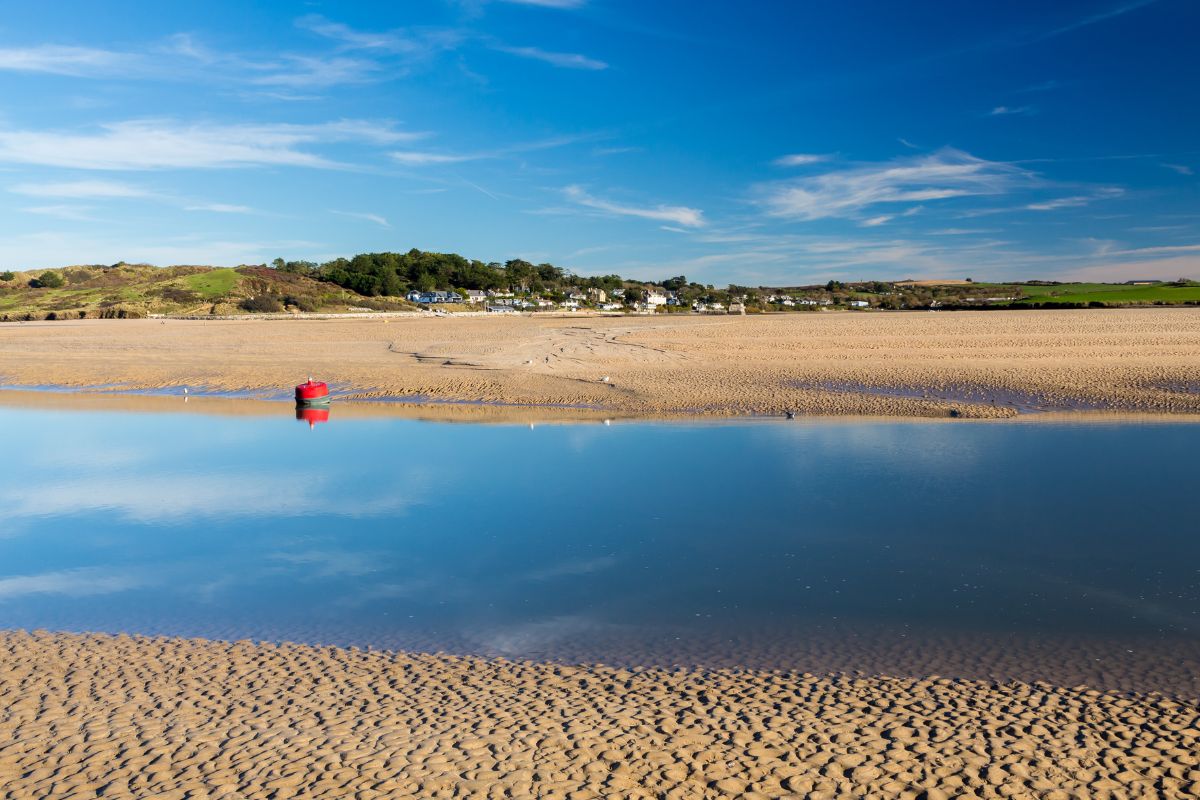
Padstow is a working harbour town on the Camel Estuary and doesn’t have its own beach as such. Its nearest stretch of sand is at St George’s Cove, a twenty-minute walk along the coast path.
The beaches most people picture when they think of Padstow beaches are situated to the west around Trevose Head. These beaches are known locally as “the Seven Bays”: Constantine, Booby’s, Treyarnon, Harlyn, Mother Ivey’s, Trevone and Porthcothan. Each of these beautiful stretches of golden sand near St Merryn are set alongside the Atlantic, where the dunes give way to marram grass and the light changes with the tide.
Table of Contents
Does Padstow have a beach?
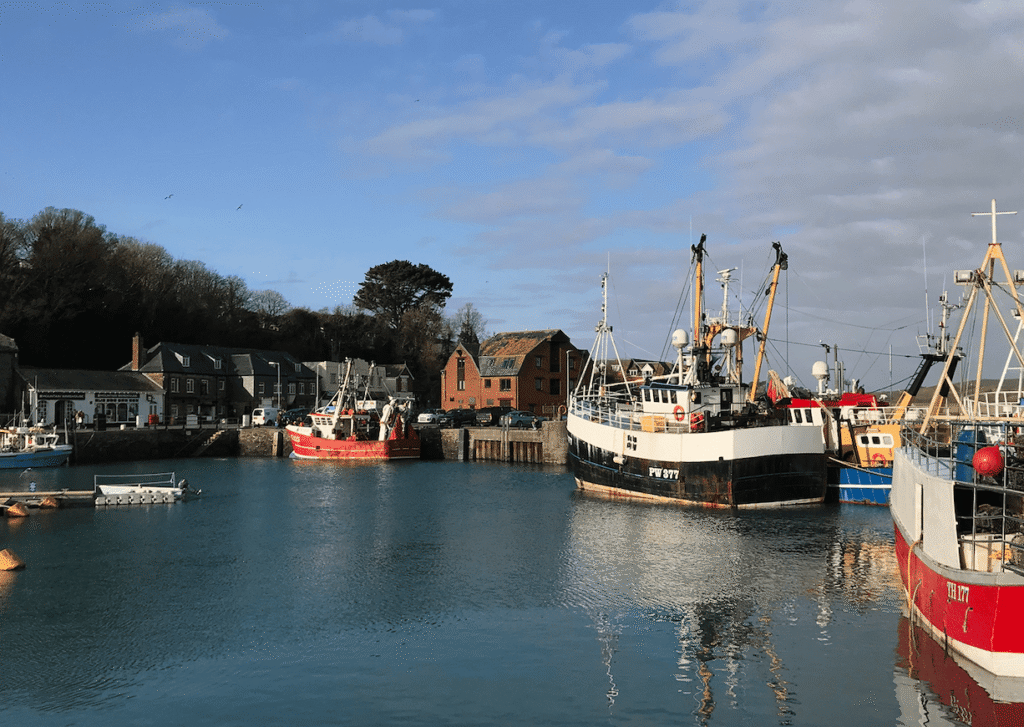
Not in the town itself. The quay, the fishing boats and the narrow streets of this harbour town were built around the water, but there’s no sandy beach as such.
The beaches around Padstow fall into two quite different groups, and knowing which is which will give you an insider’s knowledge of this stretch of coastline.
- The estuary coves sit to the north of the town, following the western bank of the Camel out towards Stepper Point. St George’s Cove, Harbour Cove and Hawkers Cove are sheltered, shallow and reachable on foot. At low tide they join into a single stretch of sand running well over a mile. These are the beaches for a slow afternoon, a picnic and a swim in calm waters. They are also tidal in a way that can sometimes catch people out, and none of them are lifeguarded.
- The Atlantic bays lie three to five miles west, wrapped around the headland at Trevose Head. The Seven Bays boast open coast with proper surf and wide golden sand backed by dunes. Most are lifeguarded through the season and you can enjoy exploring the rockpools on a spring low tide.
Padstow beaches at a glance
| Beach | From Padstow | Best for | Lifeguards | Dogs | Parking | Tide |
| St George’s Cove | 0.6 mi (walk) | Sheltered swim, picnic | No | Seasonal restriction | None, walk in | Cut off at high water |
| Harbour Cove | 1.2 mi (walk) | Long sands, dune shelter | No | Year round | Limited, Tregirls | Best at low |
| Hawkers Cove | 1.8 mi (walk) | Quiet, estuary views | No | Year round | Very limited | Best at low |
| Trevone Bay | 3 mi | Rock pools, families | Seasonal | Seasonal restriction | Car park behind beach | Sand shrinks at high |
| Harlyn Bay | 4 mi | Beginner surf, all tides | Seasonal | Year round | Large, fills by mid-morning | Usable at all tides |
| Mother Ivey’s Bay | 4.5 mi | Seclusion, calm water | No | Year round | None public, walk in | Low to mid only |
| Booby’s Bay | 5 mi | Space, walking, sunsets | No | Year round | Constantine, then walk | Low tide only |
| Constantine Bay | 5 mi | Surf, wide sand, sunsets | Seasonal | Seasonal restriction | Two car parks | Best mid to low |
| Treyarnon Bay | 5.5 mi | Natural pool, families | Seasonal | Seasonal restriction | Car park above beach | Pool at low tide |
| Porthcothan Bay | 6.5 mi | Sheltered swim, quiet | Seasonal | Year round | Roadside and small park | Narrow at high |
Dog restrictions run Easter Sunday to 1 October on restricted beaches. Always check current dates with Cornwall Council before travelling.
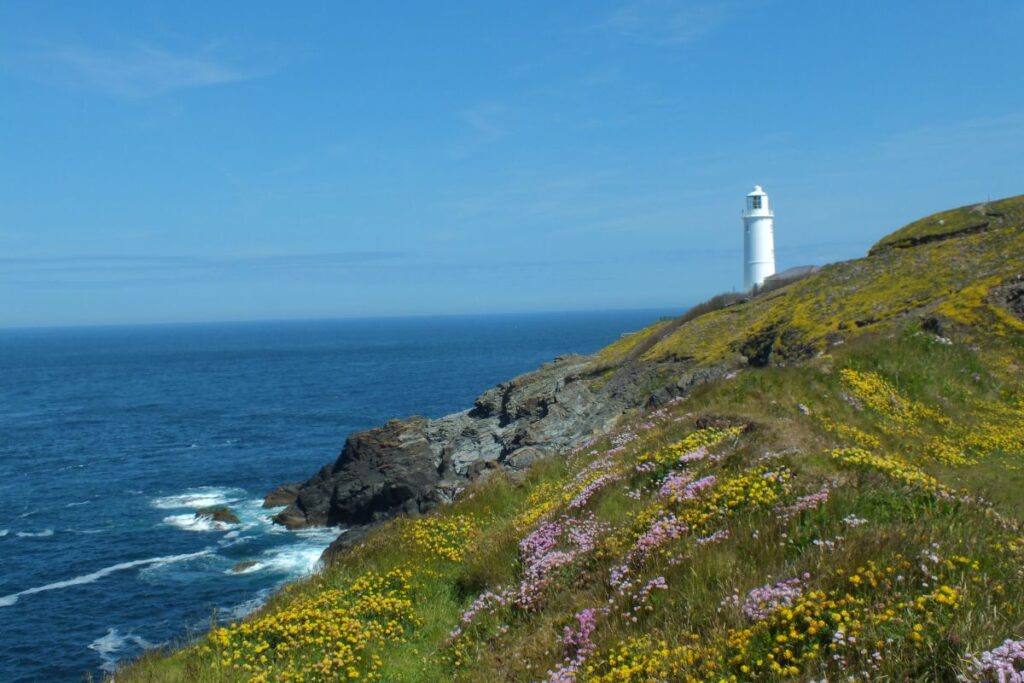
The Seven Bays: Padstow’s best beaches
Seven beaches, six miles of coast, and all different in character and beauty. What follows is how we would choose, having watched this coastline from the same spot for a hundred years.
Constantine Bay
Wide, exposed and the most consistently beautiful of the seven. A vast sweep of pale sand backed by protected dunes, with the Atlantic arriving unfiltered from the west. The golf club sits directly behind those dunes, which is the reason we’ve produced this guide!
- Best for: surfing, long walks, sunsets, and mighty dunes
- Tide and wind: an offshore easterly is the magic combination and produces the best waves on this coast. It works from mid to low tide. At high water the beach narrows considerably and the water pushes back towards the dunes
- Parking: two car parks, both filling up early on a summer morning. The one at the southern end is nearer the water.
- Facilities: seasonal lifeguards, a shop and café at the top of the lane, public toilets.
- One local thing: there is a persistent rip at the northern end, near the rocks towards Booby’s. It runs hard on a dropping tide, and it is the single most important thing to know about this beach. Always swim between the flags and stay south of the halfway point. The dunes behind are an SSSI, so keep to the marked paths.
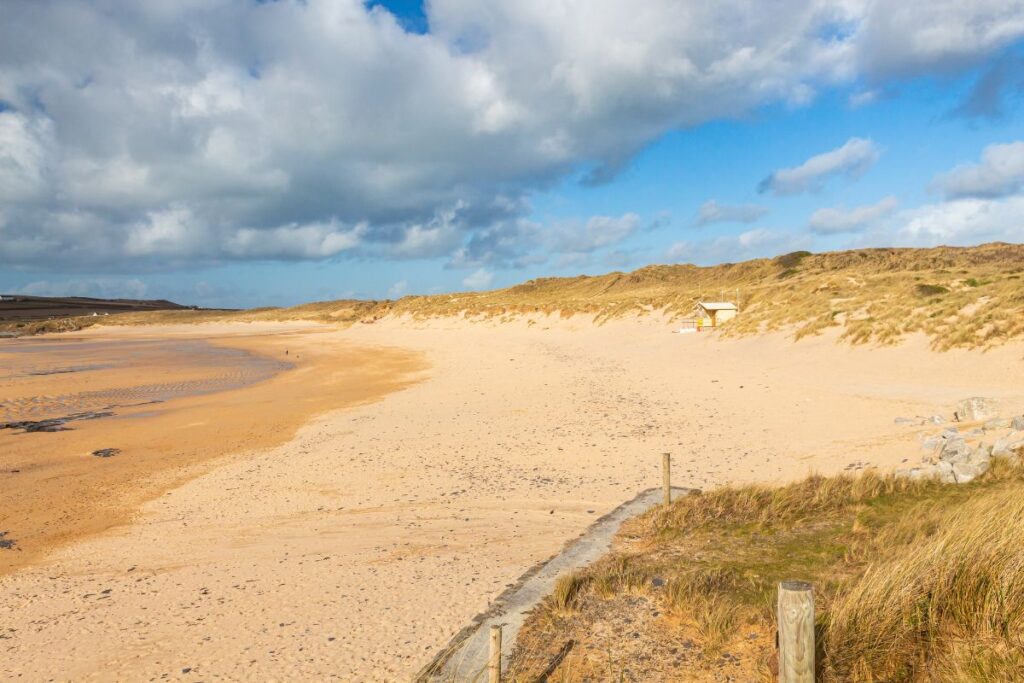
Booby’s Bay
Constantine’s quieter neighbour, reached by walking north across the rocks at low tide or over the dune path. Fewer people, more space, and a raw, unmanaged feel.
- Best for: escaping the crowds, dog walks, and a sunset all to yourself.
- Tide and wind: low tide only. At high water, the two bays separate and Booby’s largely disappears. The swell here is heavier and less forgiving than Constantine.
- Parking: none of its own. Use Constantine and walk across, or park in the National Trust car park.
- Facilities: none. No lifeguards, no toilets, no café. There is a coffee van at the National Trust car park.
- One local thing: on a big spring low, the ribs of the Carl, a German barque wrecked here in 1917, still show through the sand at the northern end. It is not visible every year and never for long. Ask at the club whether the sand has moved.
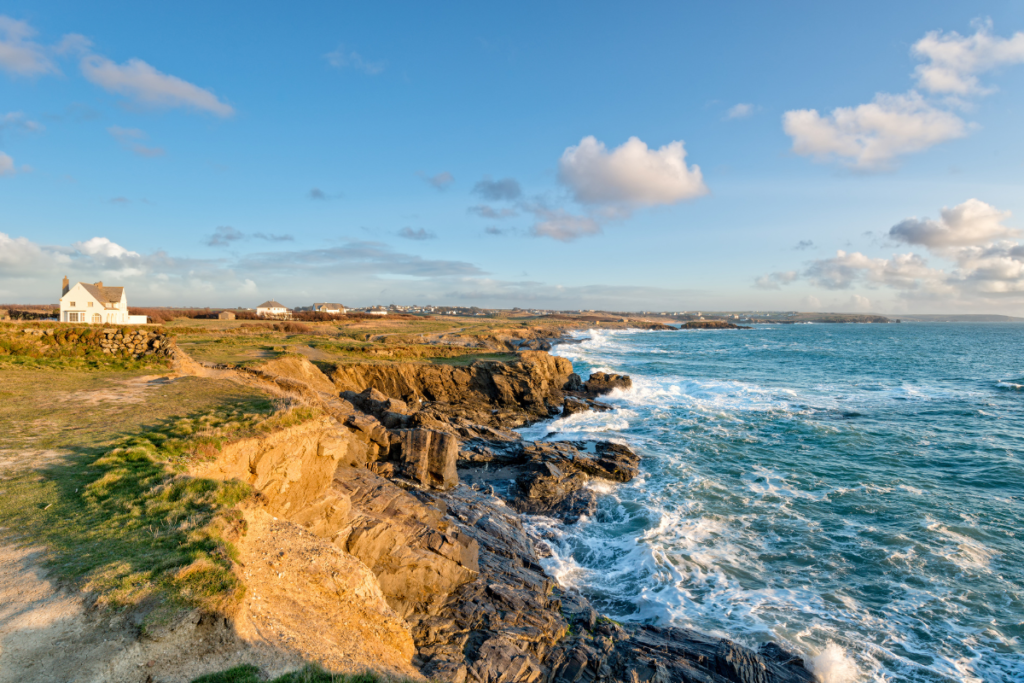
Treyarnon Bay
A compact, sheltered bay tucked behind rocky headlands, with a rock ledge to the south that holds the best natural swimming pool on this coast.
- Best for: families, rock pooling, and swimming without the surf
- Tide and wind: the tidal pool appears roughly two hours either side of low water and holds warm, clear water in summer. The main beach is decent for beginner surf but gets crowded.
- Parking: a car park on the slope above the beach.
- Facilities: seasonal lifeguards, café, toilets, YHA above the beach.
- One local thing: the pool is on the right as you face the sea, over the rocks, and is deeper than it looks from the sand. Only accessible at low tide. Go early, because by midday in August it can get very busy.
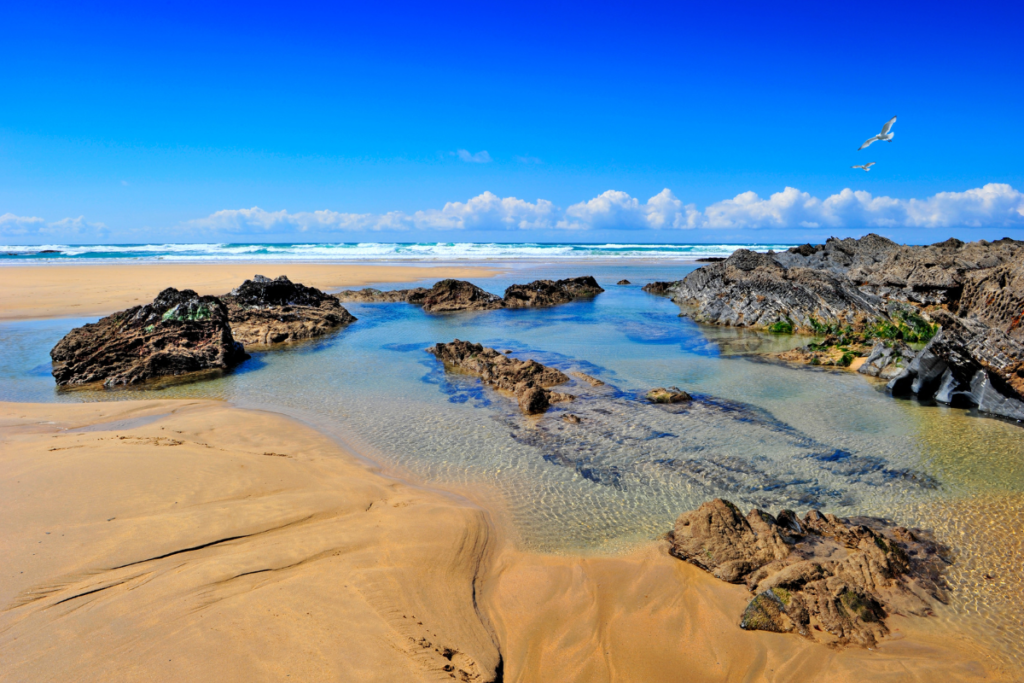
Harlyn Bay
The most useful beach on this coast, and the one to head for when everywhere else is unworkable. It faces north, tucked behind Trevose Head, which shelters it from the prevailing southwesterlies.
- Best for: beginner surfing, families, and days when the wind is wrong everywhere else.
- Tide and wind: usable at every state of the tide, which is rare. Sheltered in a southwesterly, exposed and messy in a northerly.
- Parking: a large car park behind the beach that still fills by mid-morning in August.
- Facilities: seasonal lifeguards, beach café, toilets, surf school, dogs allowed year-round.
- One local thing: this is where the surf schools go when the swell is too big elsewhere. The bay is also an archaeological site; an Iron Age cemetery was found in the dunes behind, and the fields above are worth a look for the burial ground marker.
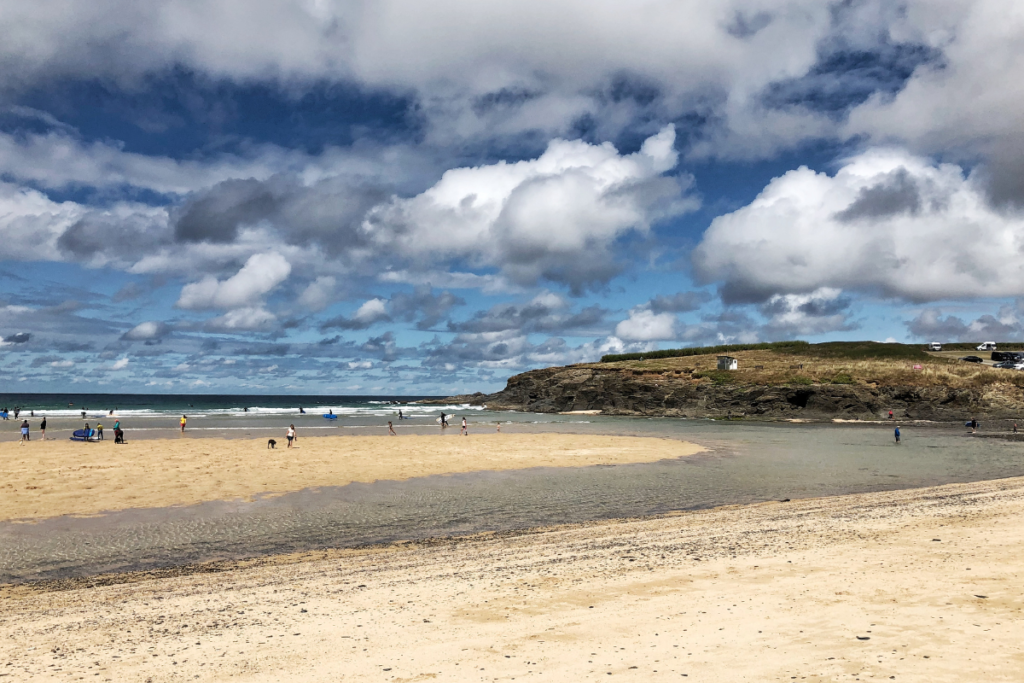
Mother Ivey’s Bay
A crescent of sand below the old lifeboat station, quieter than its neighbours because there is no easy way in. The water here is often the calmest of the seven.
- Best for: seclusion, swimming, and a proper sense of natural beauty.
- Tide and wind: low to mid tide. At high water, the sand largely goes. Sheltered from the southwest.
- Parking: no public car park. Walk in from Harlyn or along the coast path from Trevose Head.
- Facilities: none. No lifeguards.
- One local thing: the name comes from a local legend about a curse laid on the field behind the beach, which is said to be the reason it has never been ploughed. True or not, the legend exists even today. You can see the impressive lifeboat station to the left as you look at the sea (go on Wednesday evenings to watch the training launches through summer)
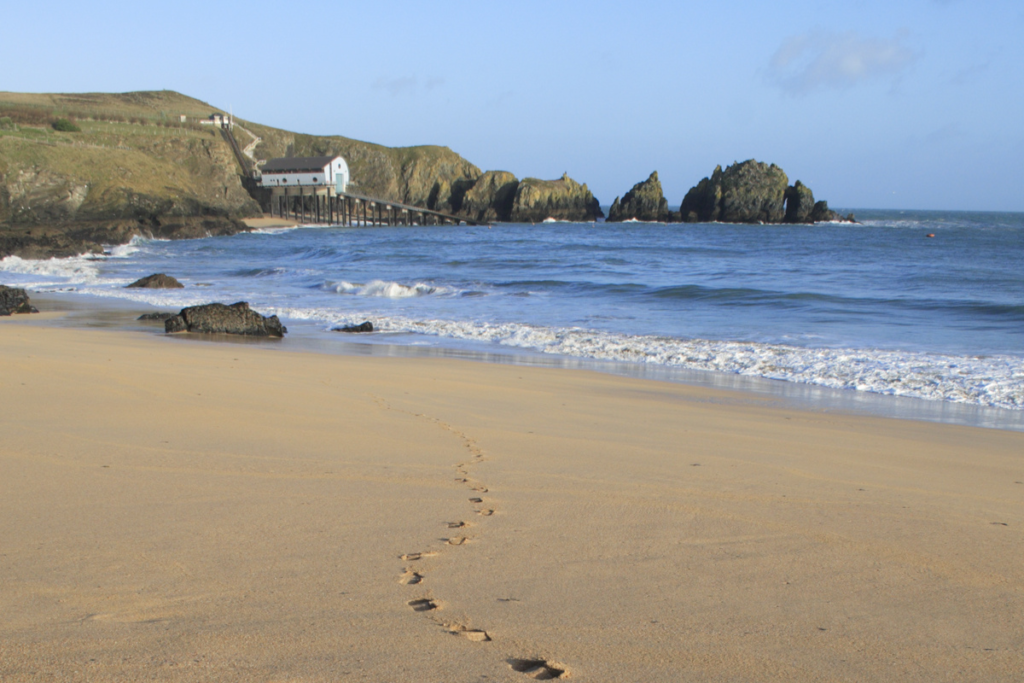
Trevone Bay
The nearest of the seven to Padstow and the easiest to reach without a long drive. A sandy bay bordered by cliffs, with a rocky shelf to one side.
- Best for: rock pooling, families, and a short trip from the village
- Tide and wind: the sand reduces markedly at high tide. Low water opens up the pools on the western side.
- Parking: a car park directly behind the beach, plus roadside space.
- Facilities: seasonal lifeguards, café, toilets.
- One local thing: If you look up to the right from the beach you’ll see Round Blow Hole, a collapsed sea cave forming a 25 metre crater in the clifftop with the sea churning at the bottom. Never go close to it, but its impressive to watch safely from the beach on a stormy day.
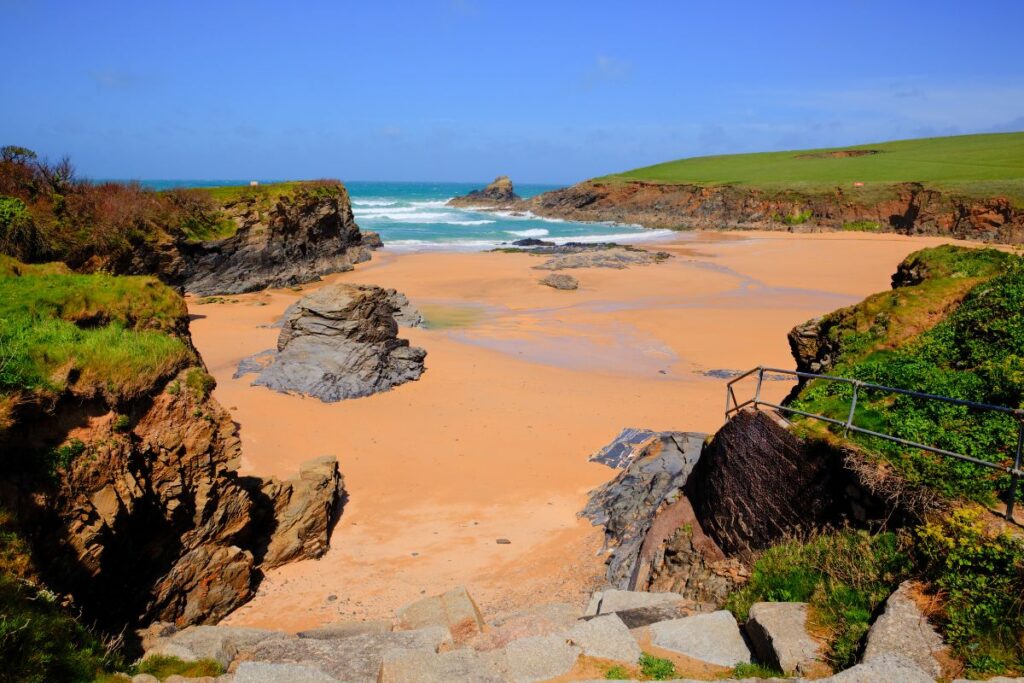
Porthcothan Bay
The southernmost of the seven, a long narrow inlet running back between high cliffs. Sheltered, shallow and noticeably calmer than the open bays to the north.
- Best for: swimming, paddleboarding, and families wanting less surf.
- Tide and wind: the bay narrows sharply at high tide, and the beach can nearly vanish. Low water reveals a wide flat expanse and caves at the northern end.
- Parking: a small car park and limited roadside space, both tight in summer.
- Facilities: seasonal lifeguards, shop, toilets, dogs allowed year-round.
- One local thing: the caves and “horse pool” are only safely reachable on a falling tide. People get caught here every summer. Check the tide before you walk around and take care of the rip.
Beaches within walking distance of Padstow
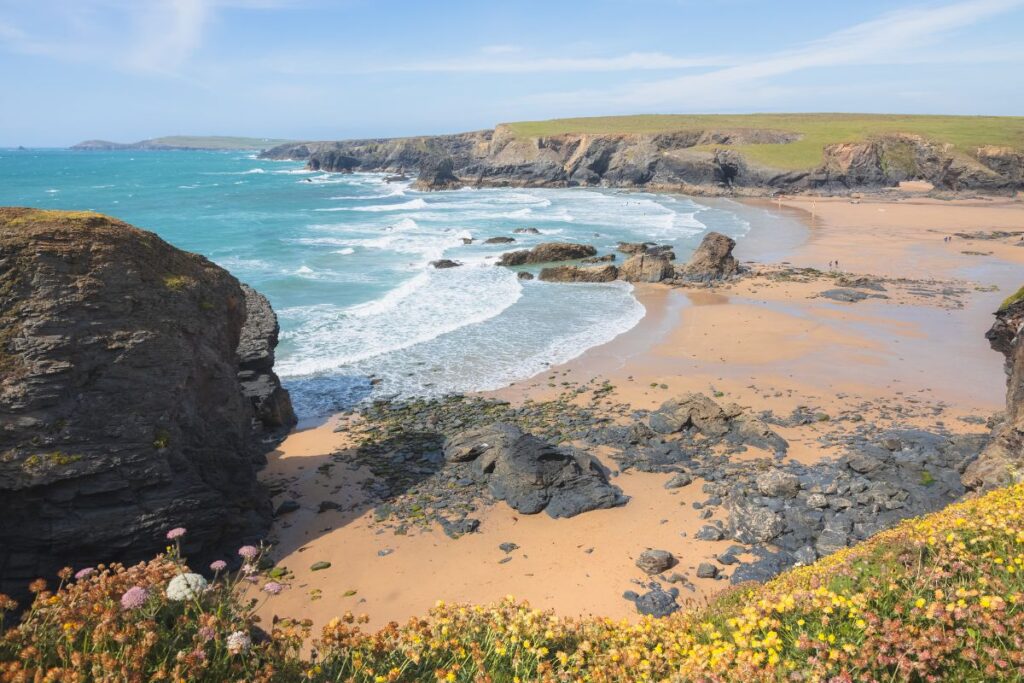
If you want the beach at the end of a slow morning in town, three coves sit within an easy walk north of the harbour. Follow the coast path past the war memorial and the estuary opens up in front of you. At low water the three run together into a single stretch of sand well over a mile long. At high water they are three separate coves. None are lifeguarded, and all are tidal. Check the tide before you set out.
St George’s Cove
Padstow’s nearest beach, just over half a mile from the harbour and about twenty minutes on foot. A sheltered sandy inlet facing across the estuary towards Rock, with calm shallow water and views back to the boats.
- Best for: a picnic, a paddle, and a gentle swim.
- The catch: the cove is cut off at high tide, and people are caught out here every season. Note the time of high water before you walk down.
- Dogs: restricted in summer, 10 am to 6 pm. Allowed outside those hours.
Harbour Cove
Ten minutes further on, and the pick of the three. A wide arc of sand backed by dunes, sheltered by Stepper Point from all but the strongest wind. At low tide the sand stretches for well over a mile.
- Best for: space, dune shelter, and long flat-water swims.
- Parking: limited spaces at Tregirls Farm
- Dogs: allowed year-round.
Hawkers Cove
The furthest of the three, around forty minutes from the harbour, sitting beneath the old lifeboat station at the mouth of the Camel. Quiet even in August.
- Best for: a walk with a destination, and watching the boats work the estuary channel.
- One local thing: the currents where the estuary meets the sea are strong, and the Doom Bar sandbank sits just offshore. This is a beach for walking rather than swimming.
- Dogs: allowed year-round.
Across the estuary: Rock and Daymer Bay
The Black Tor ferry runs from Padstow harbour to Rock in around ten minutes, and it is the quickest way to a completely different stretch of coast. Rock has a long shelf of golden sand and a sailing scene to match. Daymer Bay, a mile further round, is gently shelving, sheltered and one of the safest family beaches on this coast.
- Best for: calm water for young children.
- One local thing: the ferry timetable shifts with the tide, and at low water it leaves from a different point down the beach. Check the return time before you cross, particularly in shoulder season when sailings stop earlier than you expect.
Which Padstow beach should you choose?
Ten beaches within six miles is a luxury until you have to decide which one to choose! Here is how we would decide.
Best for families with young children
Treyarnon Bay The natural tidal pool on the rocks to the south is the single best thing on this coast for small children: warm, clear, waist-deep and entirely free of swell. Time your arrival for two hours either side of low water, take something for their feet, and go early.
Best for surfing and lessons
Harlyn Bay for beginners. It faces north, tucked behind Trevose Head, so it stays workable when the prevailing southwesterly has made a mess of everywhere else. The waves are forgiving, the surf schools are on the sand, and it works at all tides.
Constantine Bay for anyone with experience. Bigger, faster and considerably less patient, at its best on a mid to low tide with an offshore easterly. Not the place to learn.
Best for swimming
Mother Ivey’s Bay on a calm day, for the clearest and most sheltered water of the seven, though you will have to walk in. For flat water with no surf at all, the estuary side wins: Harbour Cove is sheltered by Stepper Point and holds its water on a rising tide. And whichever you choose, swim between the flags where they are flying.
Best for a quiet walk
Booby’s Bay at low tide, walked from Constantine across the rocks. No car park, no café, no lifeguards, and often no one else either. Hawkers Cove on the estuary side does the same job from town.
Best at high tide
Harlyn Bay. Almost every beach on this coast shrinks or disappears at high water. Constantine holds a workable strip of sand at high water too, though the water pushes back towards the dunes and the space goes quickly.
When to visit
Tides, and why they matter more here than anywhere
The range of tides on this stretch of North Cornwall is large, and the beaches respond dramatically. Booby’s Bay effectively does not exist at high water. Treyarnon’s tidal pool appears for around four hours a day and then vanishes under the sea. St George’s Cove cuts off entirely, and every summer somebody discovers this the hard way. The sea can be very dangerous, and the tides must be respected so that everyone remains safe.
The habit worth forming is simple: check the tide before you choose the beach. Padstow is the tide station to use, and the times shift by roughly fifty minutes each day. Spring tides, around the new and full moon, exaggerate everything. That is when the pools are best, when Booby’s is at its widest, and when the currents run hardest.
Lifeguard season and beach safety
RNLI lifeguards patrol Constantine, Harlyn, Treyarnon, Trevone and Porthcothan through the main season, typically from late spring to early autumn, with the fullest cover in July and August. Booby’s, Mother Ivey’s and all three estuary coves are unpatrolled year-round. Check current patrol dates on the RNLI lifeguarded beach finder before you travel, as they change annually.
Swim between the red and yellow flags. The rip at the northern end of Constantine runs hard on a dropping tide and is the most significant hazard on this coast. If you are caught in one, do not swim against it: float, raise an arm, and let it take you out until it releases.
For water quality, the Surfers Against Sewage Safer Seas Service gives real-time alerts on discharges and is worth having on your phone if you swim regularly.
The best months
July and August bring the warmest water and the fullest lifeguard cover. Beaches can also get extremely busy in high season, and car parks fill up early, so start your days early.
September is better. The sea holds the summer’s heat well into the month, often warmer than June. The Atlantic starts producing more reliable swell as the autumn systems arrive, which is why the surfers stay on. Lifeguards are still patrolling the main beaches for much of it. The light lengthens and softens, and the sunsets over Constantine become the reason to stay out past dinner. Most importantly, the beaches become quieter.
May and early June make a similar case at the other end of the season, with the dunes at their best and the water still cold enough to concentrate the mind.
Winter has its own special charm. The coast path is bracing, the storms are pure theatre, and there is a great deal to be said for a long walk along the coast followed by somewhere warm to sit.
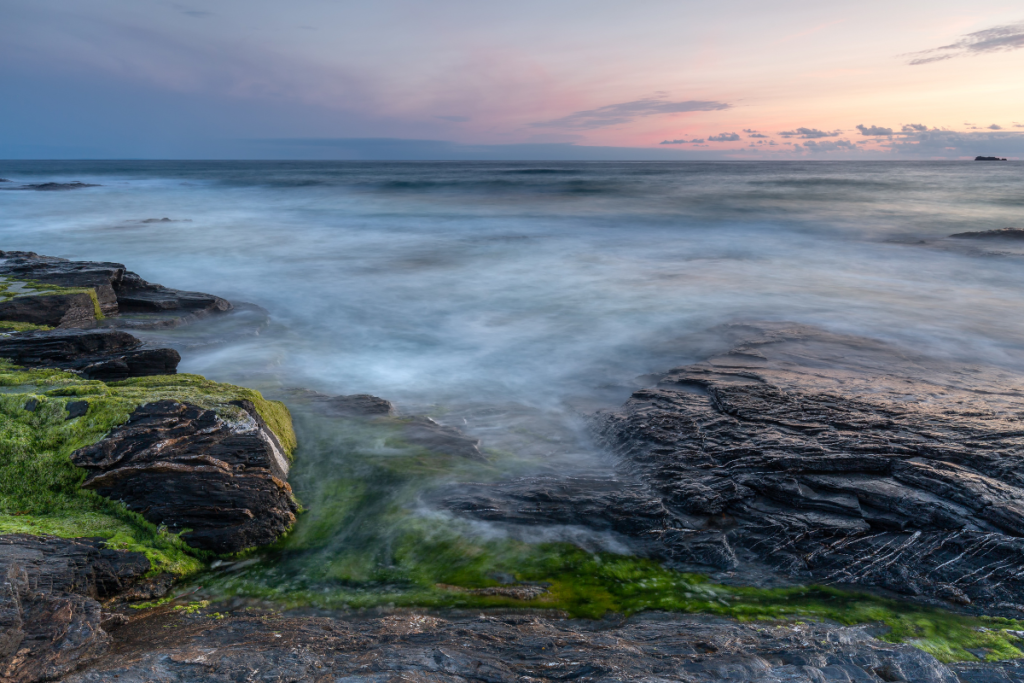
Walking between the bays
The coast path runs the length of this coastline, which means the beaches can all be stops on the same walk.
Trevose Head circular
Five miles, two to three hours, moderate.
Start at Constantine and head north past Booby’s, up onto the headland with the lighthouse ahead. The path rounds Dinas Head, where the cliffs fall away and the whole coast opens up. Down past the old lifeboat station to Mother Ivey’s Bay, then Harlyn, and back across the fields. Walk it clockwise for the best of the afternoon light. Boots rather than trainers.
Constantine Bay to Booby’s Bay
Fifteen minutes, easy, tide-dependent.
At low tide you cross the rocks at the northern end of Constantine, the quicker route and the better one for rock pools. At high water, take the dune path behind, keeping to the marked route as the dunes are protected. Do it towards evening: Booby’s faces the sunset and empties long before Constantine does.
Padstow to Stepper Point
Seven miles return, three hours, moderate.
North from the harbour past St George’s Cove and Harbour Cove to Hawkers Cove, then up to Stepper Point and the daymark tower above the mouth of the Camel. The Doom Bar sandbank shows below at low water, with Rock and Pentire Point across the estuary. Return the same way, or drop inland through the lanes.
Where to stay near Padstow’s beaches
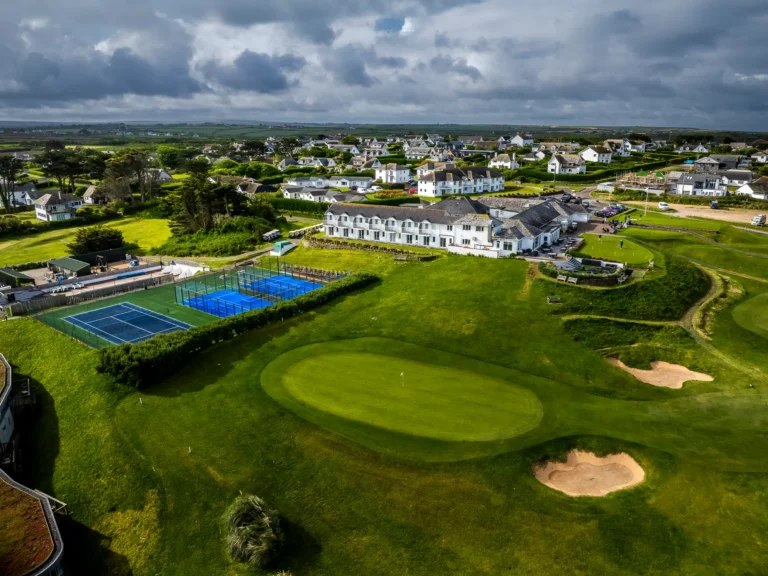
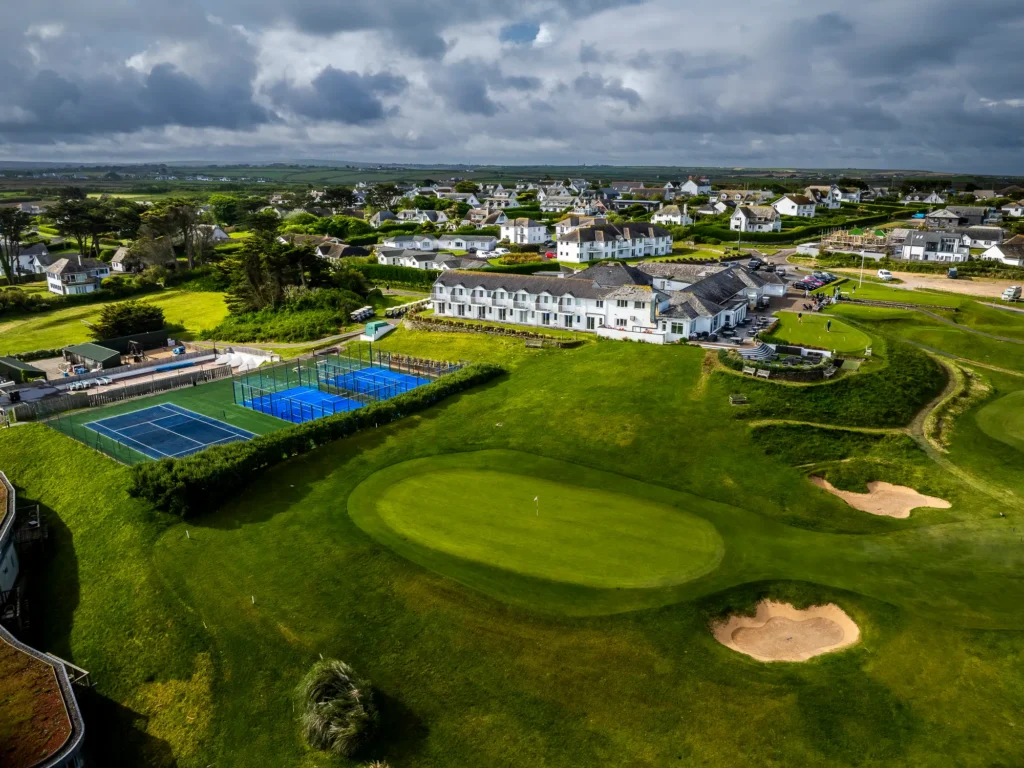
Trevose sits behind the dunes at Constantine Bay, in the middle of the Seven Bays, which is why we know this beautiful corner of the world better than anyone.
Our lodges, bungalows and apartments look out over the same coastline, with three courses, tennis, padel and a pool for when the weather turns. The beach is a walk across the dunes. Stay where the Seven Bays begin
Padstow Beaches FAQs
Which is the prettiest beach in Cornwall?
It depends on what you want from a beach. Kynance Cove on the Lizard and Porthcurno in the far west take most of the votes for drama. On the north coast, Treyarnon on a low spring tide is hard to beat, and Constantine at sunset makes a strong case of its own.
Where can I swim in Padstow, Cornwall?
Not in the town, and not safely in the harbour. For flat, sheltered water, walk north to Harbour Cove. For the clearest swimming on this coast, Mother Ivey’s Bay on a calm day. For lifeguard cover, Constantine, Harlyn, Treyarnon, Trevone or Porthcothan in season.
What are the seven bays located in Padstow?
The Seven Bays are Constantine, Booby’s, Treyarnon, Harlyn, Mother Ivey’s, Trevone and Porthcothan. They sit near St Merryn, three to six miles west of Padstow, wrapped around Trevose Head, and give the area its local name of Seven Bays.
Where is the beach in Cornwall that looks like the Caribbean?
That is usually Pedn Vounder or Porthcurno, both in West Cornwall, where white sand and granite produce startlingly turquoise water. Closer to Padstow, Treyarnon and Constantine on a clear low tide do something similar, with better surf.
Which beaches near Padstow have lifeguards?
Constantine, Harlyn, Treyarnon, Trevone and Porthcothan are patrolled by RNLI lifeguards in season, usually late spring to early autumn. Booby’s, Mother Ivey’s and the estuary coves are unpatrolled year-round. Check current dates with the RNLI before travelling.
Which is the best beach near Padstow for families?
Treyarnon, for the natural tidal pool on the rocks to the south. It appears around two hours either side of low water and is shallow, clear and free of swell. Daymer Bay across the estuary is the calmer alternative.
Which beach near Padstow is best for beginner surfers?
Harlyn Bay. It faces north behind Trevose Head, so it stays sheltered when the prevailing southwesterly has ruined conditions elsewhere, and it works at all tides. There are several surf schools based here.
Which Padstow beaches are dog friendly all year?
Harlyn, Booby’s, Mother Ivey’s, Porthcothan, Harbour Cove and Hawkers Cove allow dogs year-round. Constantine, Treyarnon, Trevone and St George’s Cove have seasonal daytime restrictions.
Is Constantine Bay dog friendly?
Yes, outside the summer restriction. Dogs are banned during the day in the main season, typically Easter to the start of October, and allowed early morning and evening. Confirm current dates with Cornwall Council.
How far are the Seven Bays from Padstow?
Trevone is nearest at around three miles, Porthcothan furthest at six and a half. Constantine, Booby’s and Treyarnon sit at five to five and a half miles, roughly a fifteen minute drive.
Where can you park at Constantine Bay and Harlyn?
Constantine has two car parks – one up the lane and one smaller one nearer the beach. Harlyn has one large car park behind the beach. All three fill by mid-morning in July and August, so arrive before ten or after four.